Online shopping is changing, and augmented reality (AR) is a big reason why. It’s like bringing the store into your home, letting you see products in a whole new way. This isn’t just a cool trick; it’s making a real difference for businesses. We’re talking about better ways to show off products, fewer returns, and happier customers. Let’s look at how ecommerce augmented reality is shaking things up.
Key Takeaways
- Augmented reality blends digital items with the real world, unlike virtual reality which creates a separate digital space. This makes it super useful for online shopping.
- AR lets you see how products look in your own space or on yourself, like trying on clothes or placing furniture before you buy. This helps you make better choices.
- Using ecommerce augmented reality can lead to more sales because people feel more confident about their purchases. It also means fewer items get sent back.
- Big names in fashion, beauty, and home goods are already using AR successfully. Think virtual makeup try-ons or seeing how a sofa fits in your living room.
- Getting started with AR doesn’t have to be complicated. Many platforms make it easier to add these features to your online store, and Web AR means customers don’t even need a special app.
Understanding Augmented Reality in Ecommerce
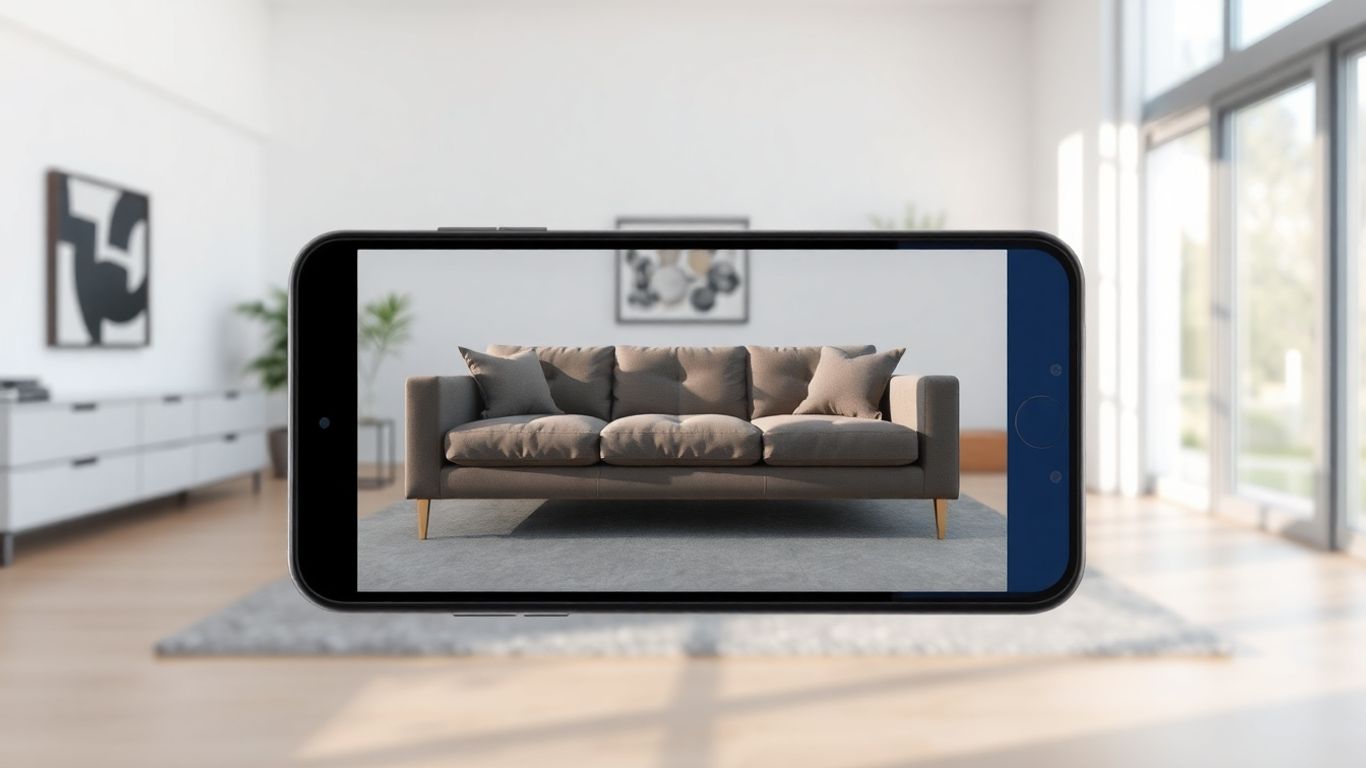
Augmented reality, or AR, is changing how we shop online. It’s not about escaping into a completely different world like virtual reality does. Instead, AR adds digital stuff – like images, sounds, or 3D models – to what you’re already seeing through your phone or tablet. Think of it like a digital overlay on your real surroundings. This technology is becoming a big deal in online retail, helping to bridge the gap between looking at a product on a screen and actually imagining it in your life. The market for this is growing fast, with projections showing it could reach over $248 billion by 2030 in the US alone.
Defining Augmented Reality
At its core, augmented reality is about blending the digital and physical. It takes computer-generated information and places it right into your real-world view. You might have seen this already with sports broadcasts showing first-down lines or projected flight paths in golf. It’s not just for entertainment, though. In ecommerce, this means you can see how a piece of furniture might look in your living room or try on glasses without leaving your couch. The key is that it enhances your current reality, rather than replacing it.
AR Versus Virtual Reality for Online Shopping
It’s easy to mix up AR and VR, but they’re quite different, especially for shopping. Virtual reality (VR) completely immerses you in a digital environment. You put on a headset and you’re somewhere else entirely. Augmented reality (AR), on the other hand, keeps you grounded in your actual surroundings but adds digital elements to it. For online shopping, AR is often more practical. While VR could let you walk through a virtual store, AR lets you see a virtual sofa in your actual living room. This makes AR more accessible for everyday use, as it typically works with devices most people already own, like smartphones. VR, on the other hand, usually requires more specialized and expensive hardware.
The Growing Market for Ecommerce Augmented Reality
AR in ecommerce isn’t just a passing trend; it’s a significant shift. Many shoppers are showing interest in using AR for their purchases. A McKinsey survey indicated that nearly half of those asked were keen on trying AR/VR for shopping. This technology is proving to be more than just a novelty; it’s a strategy that businesses are adopting to stand out. The potential for AR to boost sales is substantial; some reports suggest it can increase conversion rates by up to 94%. This makes it a powerful tool for online stores looking to improve customer experiences and drive growth. It’s becoming a necessity for brands wanting to capture consumer attention in a crowded digital space. You can explore how AR is reshaping retail by looking at examples of virtual product try-ons.
The success of an AR experience hinges on the quality and relevance of the content it presents. It’s not just about the technology itself, but how well it integrates useful and engaging digital information into the user’s real-world view.
Transforming the Customer Journey with AR
Augmented reality (AR) is really changing how people shop online. It’s not just about looking at pictures anymore; AR lets customers interact with products in a whole new way, right from their own homes. This makes online shopping feel a lot more real and personal.
Enhancing Product Visualization
Imagine trying to buy a couch online. You see pictures, maybe a video, but it’s hard to tell if it will actually look good in your living room. AR solves this. You can use your phone to place a virtual 3D model of that couch right into your actual room. You can walk around it, see how it fits with your other furniture, and check the colors. It’s like having a virtual showroom in your pocket.
- See products in your own space: Visualize furniture, appliances, or decor before buying.
- Check dimensions and fit: Understand the true size and scale of an item.
- Experiment with styles and colors: Easily swap out different options to find what works best.
This ability to ‘try before you buy’ gives shoppers a much better sense of what they’re getting. It cuts down on guesswork and makes people feel more confident about their purchase.
Enabling Virtual Try-Ons
For things like clothing, makeup, or accessories, AR virtual try-ons are a game-changer. Instead of just guessing if a lipstick shade will suit you or if a dress will fit, you can use your device’s camera. The AR app overlays the product onto your image in real time. You can see how that new pair of glasses looks on your face or how that shirt drapes on your body. It’s a fun and practical way to shop for items where fit and appearance are key.
Virtual try-ons reduce the uncertainty that often leads to online shoppers hesitating. It bridges the gap between seeing a product online and actually experiencing it.
Creating Immersive Virtual Showrooms
Some companies are going a step further by creating full virtual showrooms. These aren’t just single products; they’re curated spaces where customers can explore collections. Think of a furniture store letting you walk through different room designs, or a car dealership allowing you to customize a vehicle and see it from every angle. These experiences are more engaging than a standard website, making the shopping process feel more like an adventure and less like a chore. It helps customers discover new items and get a feel for a brand’s entire product line.
Key Benefits of Ecommerce Augmented Reality
So, why should you even bother with augmented reality for your online store? It’s not just some fancy tech gimmick; it actually does some pretty cool things that can help your business. Think of it as giving your customers a much better way to check out your products before they buy.
Boosting Conversion Rates
This is a big one. When people can actually see what a product looks like in their own space, or try it on virtually, they feel more confident about buying it. It’s like taking the guesswork out of online shopping. For example, seeing how a sofa would fit in your living room or if a pair of glasses suits your face makes a huge difference. Studies have shown that products with AR features can see a significant jump in conversion rates. It’s not just a small bump either; we’re talking about numbers that can really move the needle for your sales.
Reducing Product Returns
Returns are a pain for everyone involved. Customers buy something, it doesn’t quite fit or look right when it arrives, and then they have to go through the hassle of sending it back. AR helps fix this. By letting customers visualize products more accurately beforehand, you cut down on those "oops, this isn’t what I expected" moments. This means fewer returns, which saves you money and keeps your customers happier because they got what they actually wanted.
Increasing Customer Engagement and Satisfaction
AR makes shopping more fun and interactive. Instead of just scrolling through pictures, customers can play around with 3D models, place items in their homes, or try on clothes virtually. This kind of engagement keeps people on your site longer and makes their experience more memorable. When customers have a positive and interactive experience, they’re more likely to be satisfied with their purchase and come back for more. It builds a stronger connection between the customer and your brand.
Here’s a quick look at how AR impacts these areas:
- Better Visualization: Customers see products in 3D, from all angles.
- Virtual Try-Ons: See how clothes, makeup, or accessories look on you.
- In-Home Placement: Visualize furniture or decor in your actual room.
Ultimately, AR isn’t just about showing off technology; it’s about making the online shopping process more real and trustworthy for the customer. This leads to fewer mistakes, happier shoppers, and a healthier bottom line for your business.
Real-World Applications of AR in Online Retail
Augmented reality isn’t just a futuristic concept anymore; it’s actively changing how people shop online right now. It bridges the gap between seeing a product online and actually knowing how it looks or fits in your life. Let’s look at some specific ways businesses are using it.
Fashion and Beauty Virtual Try-Ons
This is probably one of the most popular uses for AR. Think about trying on clothes or makeup without leaving your couch. Brands are letting customers use their phone cameras to see how a shade of lipstick looks on their face or how a pair of glasses sits on their nose. Warby Parker’s app, for example, lets you virtually try on different frames. Sephora’s Virtual Artist tool lets you experiment with makeup shades in real-time. This kind of virtual try-on dramatically cuts down on hesitation and helps people feel more confident about their purchase. It’s a big step towards making online fashion and beauty shopping feel more like the in-store experience.
Home Decor and Furniture Placement
Buying furniture online can be tricky. Will that sofa actually fit in your living room? Will the color match your existing decor? AR solves this. Apps like IKEA’s Place allow you to virtually place 3D models of furniture into your actual room using your phone’s camera. You can see how a table looks next to your couch or if a bookshelf fits in that corner. This helps customers make better decisions and reduces the chances of them needing to return items because they didn’t fit or look right. It’s like having a digital interior designer right in your pocket.
Automotive Customization and Visualization
Even the car industry is getting in on the AR action. Imagine being able to customize a car’s color, wheels, or interior options and then see a realistic 3D model of your personalized vehicle right in your driveway. Apps like BMW’s i Visualizer let potential buyers do just that. This gives customers a much clearer picture of what they’re ordering and can make the buying process more engaging and less uncertain. It’s a powerful way to showcase complex products with many customization options.
AR is making online shopping more interactive and less about just looking at pictures. It’s about experiencing the product before you buy, which is a game-changer for both customers and retailers. This technology helps people feel more connected to the items they’re considering, leading to happier shoppers and fewer returns.
Implementing Augmented Reality in Your Online Store
So, you’re thinking about bringing augmented reality into your online shop. That’s a smart move, honestly. It’s not as complicated as it might sound, and there are a few ways to go about it. The goal is to make it easy for customers to see your products in their own space, which really helps them decide if it’s the right fit.
Choosing the Right AR Technology
First off, you need to pick the kind of AR that makes sense for your business. There are a couple of main types to consider. You’ve got marker-based AR, which usually needs a QR code or a specific image to trigger the virtual object. Then there’s markerless AR, which is pretty neat because it uses your device’s camera to scan the environment and place objects without needing a special marker. For example, if you sell makeup, facial recognition AR is probably your best bet. But if you’re in the furniture game, you’ll want something that can map out a room, like spatial mapping.
Strategies for Seamless Integration
Getting AR into your store shouldn’t feel like a chore for you or your customers. Think about how it fits into the existing shopping flow. Maybe it’s a button right on the product page that says ‘View in Your Room’ or ‘Try It On Virtually’. The key is making it obvious and simple to use. You don’t want customers hunting around for the AR feature. It should be right there when they need it. Also, consider how it works on different devices. Most people shop on their phones, so making sure your AR works well on mobile is a big deal. You want it to load quickly and look good, no matter what phone they’re using.
Leveraging Web AR for Accessibility
This is a big one. Web AR means customers can use your AR features right from their web browser, without needing to download a separate app. This is huge because, let’s face it, nobody wants another app cluttering up their phone. By using Web AR, you’re opening the door to a lot more shoppers. It’s like putting your AR experience on a billboard that everyone can see, not just those who have a special invitation (aka an app). This approach makes AR shopping much more accessible and can really boost how many people try out your AR features. It’s a smart way to get your products in front of more eyes and make that purchasing decision easier for them. Many businesses are finding this approach quite effective for increasing engagement.
Implementing AR doesn’t have to be an all-or-nothing situation. You can start small, perhaps with a few key products, and see how your customers respond. Gather feedback and iterate. The technology is constantly improving, so what might seem complex today could be standard practice tomorrow.
The Future of Ecommerce Augmented Reality
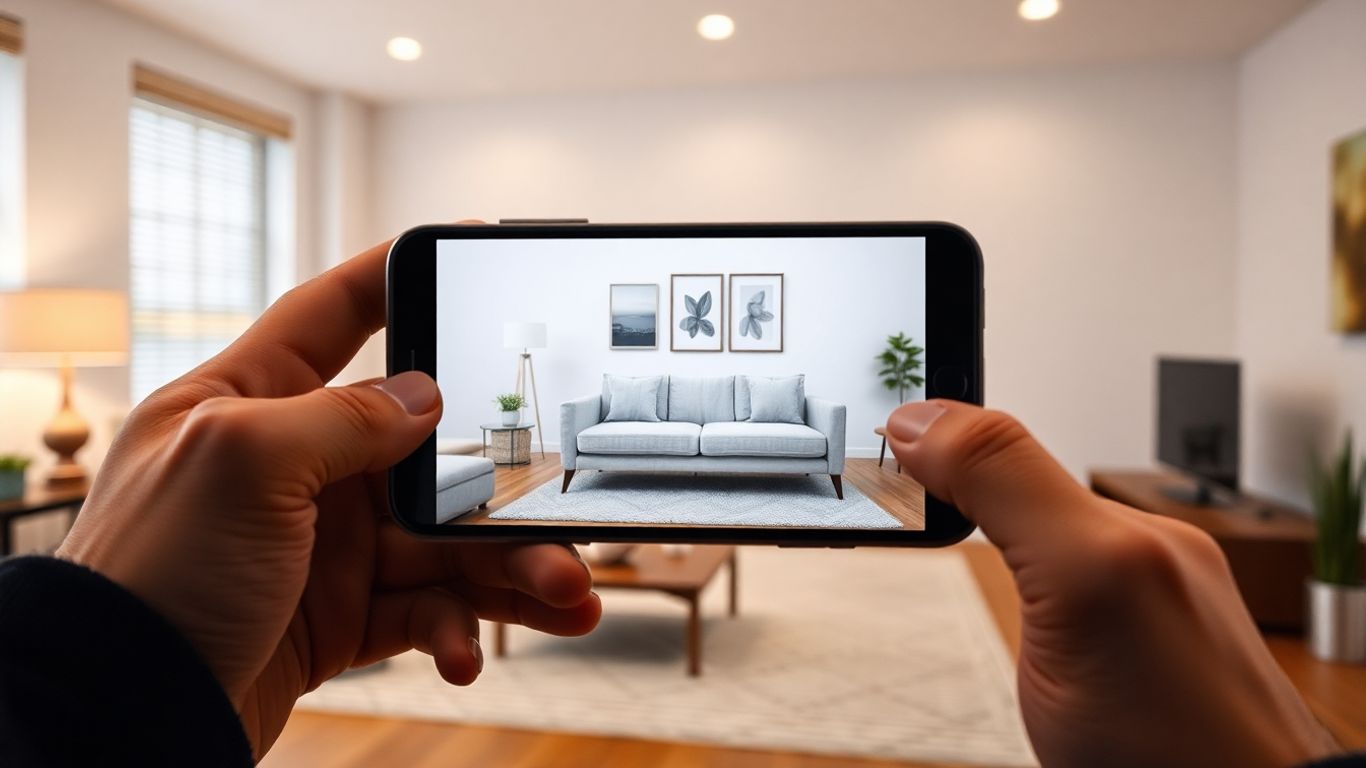
So, where is all this AR stuff in online shopping heading? It’s not just about trying on glasses or seeing if a couch fits anymore. Things are getting way more interesting.
AI-Driven Personalization
Imagine an AR experience that actually knows you. AI is going to make AR super smart. It’ll look at what you like, what you’ve bought, and even how you interact with products in AR, then suggest things that are just right for you. Think of it like having a personal shopper who can instantly show you how a new shirt would look with your favorite jeans, or how a piece of art would match the colors in your living room, all without you having to do much searching.
Metaverse Integration
This is where things get a bit sci-fi, but it’s happening. As virtual worlds, or the metaverse, become more of a thing, online stores will likely move into these spaces. AR will be the bridge. You might be walking around a virtual mall, and instead of just seeing a 3D model of a product, you could use AR to pull that product out of the virtual world and see it in your actual room. It’s about blending the digital and physical shopping experiences in a much deeper way.
Overcoming Implementation Challenges
Right now, getting AR into your online store can still be a bit of a headache and cost a pretty penny, especially if you need custom 3D models for everything. But that’s changing. More platforms are making it easier and cheaper to add AR features. We’re seeing more tools that work right in your web browser, meaning people don’t even need to download a special app. This makes AR way more accessible for everyone, from big companies to small businesses.
The next wave of AR in ecommerce won’t just be about seeing products; it’ll be about experiencing them in a way that feels natural and personalized, blurring the lines between online browsing and real-world shopping.
Here’s a quick look at what’s coming:
- Smarter Recommendations: AI will tailor AR experiences to individual tastes.
- Virtual Showrooms: More immersive spaces where you can interact with products.
- Easier Access: Web-based AR will become the norm, no apps needed.
- Interactive Packaging: Imagine scanning a product box and seeing AR content pop up.
The Future is Here, and It’s Augmented
So, we’ve talked a lot about how augmented reality is changing the game for online stores. It’s not just some futuristic idea anymore; it’s here, and it’s making a real difference. Think about it – customers can actually see how that couch will look in their living room or try on those glasses before they buy. This stuff cuts down on returns, makes people feel more confident about their purchases, and honestly, it just makes shopping more fun. As AR keeps getting better and easier to use, businesses that jump on board now are going to be the ones leading the pack. It might seem a bit much to get started, but even small steps can make a big impact. Give it a try, see what happens, and get ready to watch your customer engagement and sales climb.
Frequently Asked Questions
What exactly is Augmented Reality (AR)?
Think of Augmented Reality like a cool filter for the real world! It uses your phone or tablet to put computer-made pictures, sounds, or even 3D objects right into what you’re seeing around you. It’s like adding a digital layer on top of reality, making things more interesting, not replacing it like Virtual Reality does.
How is AR different from VR for online shopping?
Virtual Reality (VR) completely takes you to a different, made-up world, usually needing special goggles. Augmented Reality (AR), on the other hand, just adds digital stuff to the real world you’re already in, using your phone. For shopping, AR is usually easier because you don’t need fancy gear, letting you see how things like furniture would look in your actual room.
How does AR help shoppers see products better online?
AR lets you ‘try’ or ‘place’ products before you buy them. For example, you can see how a sofa would fit in your living room or how a new lipstick shade looks on your face, all through your phone’s camera. This helps you get a much better idea of what the product is really like, making you feel more confident about buying it.
Can AR really help online stores sell more and get fewer returns?
Yes, it really can! When shoppers can see products more clearly and ‘try’ them virtually, they are more likely to buy them. Also, because they have a better idea of what they’re getting, they’re less likely to return the item later. It’s a win-win: happier customers and fewer headaches for the store.
What are some real examples of AR being used in online stores?
Many stores are using AR! Think about apps where you can virtually try on glasses or makeup, or see how furniture from IKEA would look in your home. Car companies also use AR so you can customize a car and see what it looks like. It’s used a lot in fashion, beauty, and home decorating.
Is it hard for online stores to start using AR?
It used to be more complicated and expensive, but now it’s getting easier. Some online store platforms make it simpler to add AR features. The key is to choose the right AR tools for your products and make sure it’s easy for customers to use. Starting small and testing it out is a good way to begin.