So, you’ve found a great piece of clothing online, but the sizing looks a little confusing? Especially when you’re looking at Asian brands and trying to figure out the asian xl in us size equivalent, it can feel like a puzzle. Don’t sweat it, though. We’ve all been there, staring at charts and wondering if a size up or down is the right move. This guide is here to help clear things up, from knowing how to measure yourself properly to understanding why those sizes seem so different in the first place. Let’s get you shopping with more confidence.
Key Takeaways
- Always measure your body before shopping to get the most accurate size. Asian XL in US size can vary a lot.
- Asian sizing often runs smaller than US sizing, so be prepared to size up.
- Check the specific size charts for each brand, as they can differ significantly.
- Consider your height and body proportions, not just basic measurements, for a better fit.
- Don’t be afraid to get clothes altered; a tailor can make a slightly off-size garment fit perfectly.
Understanding Asian XL in US Size Conversions
So, you’ve spotted that perfect top or pair of pants online, but the sizing is listed as ‘Asian XL’. It’s a common situation when shopping from international brands, and it can definitely cause a bit of confusion. The main thing to remember is that Asian sizing often runs smaller than US sizing. This isn’t a judgment on anyone’s size; it’s just a difference in how clothing sizes have developed in different parts of the world. Think of it like trying to fit a square peg into a round hole if you don’t account for the differences.
Navigating the Nuances of Sizing Differences
It’s easy to get tripped up by sizing charts. What might be a medium in one country could be a small or even a large in another. This isn’t about one size being ‘better’ or ‘more accurate’ than another; it’s just how different regions have developed their own standards over time. For example, American sizing often runs larger than many Asian sizing systems. This can be due to a variety of factors, including average body types and historical development of the fashion industry in those regions. It’s important to be aware that a size ‘XL’ from an Asian brand might actually be closer to a US ‘Medium’ or even a ‘Small’ depending on the specific brand and country of origin.
Bridging the Gap: Converting Asian to American Clothing Sizes
When you’re looking to buy clothes from Asian brands and wear them in the US, you’ll quickly notice that the sizing isn’t quite the same. It’s not just a little bit off; sometimes it can be a big difference, and that’s totally normal. Think of it like trying to use a different country’s electrical plug – you need an adapter. Clothing sizes work similarly when crossing continents. Understanding these differences is the first step to avoiding frustration and getting a great fit. You can find resources on how to measure yourself to get started.
Common Pitfalls in Size Translation
One of the biggest headaches is that there isn’t one universal Asian size chart that works for everything. A size ‘M’ in Korea might be totally different from a size ‘M’ in Japan, and neither might match an American ‘M’. You’ll often find that Asian sizes run smaller than their American counterparts. This means you might need to size up, sometimes by a lot. Another issue is that measurements might be listed in centimeters (cm) on Asian charts, while American charts often use inches. Always double-check which unit of measurement you’re working with. It’s easy to make a mistake there and end up with something that fits all wrong.
Here are some common pitfalls to watch out for:
- Assuming a direct conversion: Don’t assume an Asian XL is always a US XL. It’s rarely that simple.
- Ignoring brand-specific charts: Every brand has its own sizing, especially across different countries.
- Not checking garment measurements: Body measurements are one thing, but the actual length of sleeves, pants, and the overall garment is also important.
- Forgetting fabric stretch: Stretchy materials are more forgiving than rigid ones.
It’s really about taking the time to measure yourself accurately. Don’t guess, and don’t rely on what size you think you are. Grab a tape measure, follow these simple steps, and you’ll be much closer to finding clothes that actually fit.
Key Body Measurements for Accurate Conversions
Okay, so you’ve got your eye on some awesome clothes from an Asian brand, but the sizing is a total mystery. Before you even look at a size chart, the most important thing you can do is get to know your own body. Seriously, forget what you think your size is based on your favorite American brands for a minute. We need actual numbers – inches or centimeters – to make this work.
Mastering the Bust Measurement
This is pretty straightforward. Grab a soft measuring tape. Wrap it around the fullest part of your chest. Make sure the tape is snug, but not digging in, and that it’s level all the way around your back. Don’t pull it too tight, or you’ll get a number that’s smaller than reality.
Finding Your True Waistline
Your waist is usually the narrowest part of your torso. To find it, try bending to one side slightly – you’ll see a natural crease. That’s your waist. Wrap the tape measure around this spot, keeping it parallel to the floor. Again, snug but not tight is the goal.
Accurate Hip Measurements for a Perfect Fit
For your hips, you want to measure around the widest part. This is typically around your rear end. Stand with your feet together for this one, and keep the tape measure level all the way around. This measurement is super important, especially for pants and skirts.
Knowing these three measurements – bust, waist, and hips – is like having a secret weapon for online shopping, especially when you’re dealing with international sizing. It takes so much of the guesswork out of it.
Here’s a quick rundown:
- Bust: Measure around the fullest part of your chest.
- Waist: Find the narrowest part of your torso, usually around your belly button.
- Hips: Measure around the widest part of your hips and rear.
It’s really helpful to have someone else take these measurements for you, especially for your back. If you’re doing it solo, try to keep the tape measure level and avoid tilting your head, which can throw off the numbers. Also, wear minimal clothing – just your underwear or a thin, form-fitting layer – so the tape measure can get a true reading.
Remember to write down your measurements in both centimeters and inches if possible, as different charts use different units. This will save you a headache later on!
Utilizing Measurement Charts Effectively
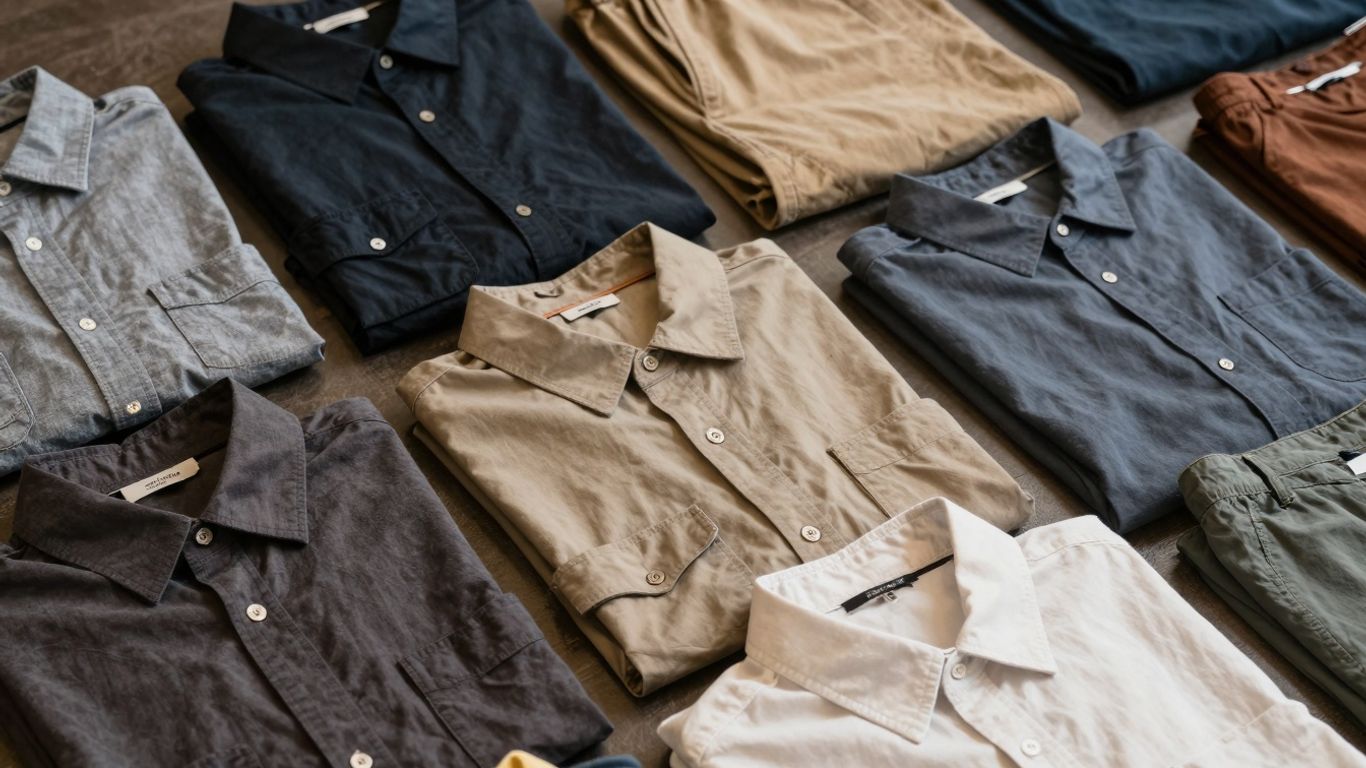
Okay, so you’ve got your measurements, but how do you actually make sense of all those confusing size charts? It’s not as simple as just looking at a number. Different brands, especially when crossing from Asian to US sizing, can have wildly different interpretations of what an ‘XL’ actually means. This is where really digging into the details of size charts becomes your best friend.
The Importance of Brand-Specific Size Charts
First things first: forget about generic size charts. They’re a starting point, maybe, but they’re rarely accurate enough for a good fit, especially when you’re dealing with international sizing. You absolutely need to find the specific size chart for the brand you’re looking at. Most online stores will have these linked directly on the product page, or you can find them on the brand’s official website. These charts are usually tailored to how that particular brand cuts its clothes. What fits perfectly from one brand might be way off from another, even if they claim to be the same size.
Converting Between Centimeters and Inches
This is a big one, and it trips a lot of people up. Asian sizing often uses centimeters (cm), while US sizing typically uses inches. It’s super easy to get mixed up here. Always double-check the units of measurement on the chart. If the chart is in centimeters and you’re used to inches, you’ll need to do a quick conversion. A simple rule of thumb is to divide the centimeter measurement by 2.54 to get the equivalent in inches. Or, if the chart is in inches and you need centimeters, multiply by 2.54. It sounds basic, but getting this wrong can mean the difference between clothes that fit and clothes that are completely unusable.
Here’s a quick reference:
- 1 inch = 2.54 centimeters
- 1 centimeter = 0.39 inches
Decoding Your Measurements for Asian to American Size
Once you have the correct units, it’s time to compare. Lay out your own measurements (bust, waist, hips) and compare them directly to the brand’s chart. Don’t just look at the size label; look at the actual measurements listed for each size. For example, if you’re looking for an Asian XL, you might see it corresponds to a certain bust measurement in cm. Then, check what US size offers a similar bust measurement in inches. It’s a bit of detective work, but it’s the most reliable way to get close.
Remember that size charts are guides, not gospel. Fabric type, stretch, and the intended fit (e.g., loose vs. tight) can all affect how a garment actually wears. Always consider these factors alongside the numbers.
Don’t get discouraged if it takes a few tries. Clothing sizes are notoriously inconsistent. The key is to be patient, measure carefully, and always, always check the specific brand’s chart.
Beyond the Numbers: Factors Influencing Fit
So, you’ve got your measurements, you’ve looked at the charts, but sometimes, the fit just isn’t quite right, is it? That’s because clothing isn’t just about numbers. A lot of other stuff comes into play, and understanding it can save you a ton of frustration.
The Impact of Height and Proportions
Think about it: two people can have the exact same bust measurement, but if one is significantly taller than the other, the sleeve length or the overall drape of a shirt might be totally different. Asian sizing, in general, tends to be cut for a shorter frame. This means that even if the width is right, the length of sleeves, pants, or the torso might be a bit too short for someone with longer limbs. It’s not just about your main measurements; your body’s proportions matter a lot.
Understanding Regional Sizing Differences
It’s not just Asia versus the US, either. Even within Asia, sizing can vary from country to country. Japan, Korea, and China might all have slightly different standards. And then you have European sizing, which is its own ballgame. This is why relying solely on a generic "Asian XL" to "US Size" chart can be a gamble. Different manufacturers and regions have different ideas about what constitutes an XL. It’s like trying to use one map for multiple countries – you’ll get lost.
Adjusting for Fabric and Fit Variations
Fabric is a huge deal. A stretchy knit will fit differently than a stiff denim or a flowy silk. A garment made from a material with a lot of give might be more forgiving if it’s a little off on the measurements, whereas something with no stretch needs to be spot on. Also, consider the intended fit of the garment itself. Is it supposed to be a loose, breezy top or a form-fitting dress? A "relaxed fit" in Asian sizing might still be quite snug compared to a "relaxed fit" in US sizing. Always check the product description for details on the intended fit and the fabric composition.
When you’re looking at Asian clothing, especially online, pay close attention to the model’s height and build if it’s provided. This can give you a visual clue about how the garment might fit someone with similar proportions. It’s not a perfect science, but it’s another piece of the puzzle.
Here are some things to keep in mind:
- Fabric Stretch: Does it have spandex? Is it a jersey knit? This will affect how much room you have.
- Garment Cut: Is it a boxy cut, a slim fit, or an A-line? The shape matters as much as the measurements.
- Intended Style: A "baggy" style in one region might be considered "regular" in another. Read the description carefully.
- Brand Quirks: Some brands just consistently run smaller or larger, regardless of region. User reviews can be your best friend here.
Bridging the Gap: Converting Asian XL to US Size
So, you’ve found that perfect piece of clothing online, but the sizing looks a little… different? It’s a super common thing when you’re shopping from brands that aren’t based in the US, especially when you’re trying to figure out Asian XL to US size conversions. Don’t sweat it, we’ve all been there. It’s not always as simple as just looking at a tag. Think of it like trying to use a different country’s power adapter – you need the right converter to make it work.
General Asian XL to US Size Equivalents
While there’s no single, perfect conversion chart that works for every single brand out there (and believe me, that would make life easier!), there are some general guidelines that can help you get started. Generally speaking, Asian sizing tends to run smaller than US sizing. This means that what’s labeled as an ‘XL’ in an Asian brand might actually be closer to a US Medium or Large. It really depends on the specific brand and country of origin.
Here’s a rough idea, but always, always check the specific brand’s size chart:
| Measurement | Asian XL (Approx.) | US Size (Approx.) |
|---|---|---|
| Bust | 38-40 inches | 10-12 |
| Waist | 31-33 inches | 8-10 |
| Hips | 41-43 inches | 12-14 |
Remember, these are just ballpark figures. Your best bet is to measure yourself and compare those numbers directly to the brand’s provided chart.
Why Asian XL in US Size Can Vary
Okay, so why the big difference? It’s not just one thing. For starters, average body proportions can differ between regions. Many Asian sizing systems are designed with different average heights and builds in mind compared to what’s common in the US. This means even if your bust measurement matches an Asian XL, the sleeve length or the overall cut might feel off if you’re taller or have a different body shape.
Plus, different countries within Asia have their own sizing standards. A size XL from Japan might not be the same as an XL from South Korea or China. And then you have individual brands that create their own charts, sometimes deviating quite a bit from the norm. It’s like a language with many different dialects – you need to learn the specific one for the brand you’re shopping from.
It’s really about taking the time to measure yourself accurately. Don’t guess, and don’t rely on what size you think you are. Grab a tape measure, follow these simple steps, and you’ll be much closer to finding clothes that actually fit.
Tips for Finding Your Asian XL in US Size
So, how do you actually find that perfect fit without ordering a dozen things and sending most of them back? Here are a few tricks:
- Measure, Measure, Measure: This is the most important step. Get a soft tape measure and take your bust, waist, and hip measurements. Write them down!
- Scour the Size Charts: Don’t just glance at them. Look for charts that list measurements in both centimeters and inches. Compare your own measurements directly to the chart for the specific item you want.
- Read Customer Reviews: Seriously, this is gold. Other shoppers often mention if an item runs small, large, or true to size. Look for comments from people who might have a similar body type to yours.
- Check Garment Measurements: Some sites will list the actual measurements of the garment itself, not just your body measurements. This can be super helpful for understanding the intended fit (e.g., is it meant to be loose or tight?).
- Consider the Fabric: Stretchy materials like knits are more forgiving than stiff fabrics like denim. If the fabric has a lot of give, you might have a bit more flexibility with sizing.
Ultimately, the key is to be patient and do your homework before clicking ‘buy’. It might take a little extra effort, but finding that great piece that fits perfectly is totally worth it.
Building Confidence in Your Sizing Choices

When to Trust Your Instincts Over the Chart
Look, size charts are great. They give you a starting point, a number to aim for. But sometimes, you just know. Maybe you’ve bought from a brand before and found their sizing runs a bit small, or perhaps a particular fabric looks like it has zero stretch. Don’t be afraid to go with your gut feeling. If a chart says you’re a US Medium, but you have a hunch a Large would be safer based on the garment’s style or your past experiences, go for the Large. It’s better to have something slightly roomy you can tailor than something too tight that’s unwearable.
Communicating Your Needs to Stylists
If you’re working with a personal shopper or stylist, especially online, be super clear about your sizing challenges. Don’t just say "Asian XL is confusing." Instead, try something like: "I typically wear a US Large, but I’ve found Asian brands often run smaller. For this particular item, I’m concerned about the bust and sleeve length. Could you help me find a US equivalent that accounts for that?" Providing specific measurements and past fit issues makes their job easier and gets you closer to the right fit.
Building Confidence in Your Sizing Choices
Ultimately, finding the right fit is a journey. It involves a bit of detective work, some trial and error, and learning to trust yourself. Here are a few more tips to help you feel more secure:
- Read user reviews: Seriously, other shoppers are your best friends. Look for reviews from people with similar body types or who mention specific fit issues you’re worried about.
- Check brand-specific charts: If you’re eyeing something from a particular brand, always look for their size chart. International conversions are general, but a brand’s own chart is usually more accurate for their specific cuts.
- Consider the garment’s purpose: A tight-fitting athletic top will have different sizing needs than a loose, flowy blouse. Think about how you want the item to fit for its intended use.
- Don’t be afraid to return: Most online retailers have decent return policies. If something doesn’t fit, send it back. It’s part of the process!
The more you shop and pay attention to how different sizes and styles fit your body, the better you’ll become at predicting what will work. It’s like learning a new language – the more you practice, the more fluent you get. Don’t get discouraged by a few missteps; each one teaches you something valuable about your own measurements and preferences.
Wrapping It Up: Your Newfound Sizing Confidence
So, there you have it. Figuring out Asian to US clothing sizes might seem like a puzzle at first, but it’s totally doable. Remember to always grab that tape measure and check the specific brand’s size chart – those are your best friends in this whole process. Don’t sweat it if a size isn’t quite right the first time; it happens to everyone, even with brands in the same country. With a little practice and by trusting your measurements, you’ll be shopping like a pro, finding awesome pieces that fit you perfectly, no matter where they come from. Happy shopping!
Frequently Asked Questions
Why is it so hard to figure out clothing sizes between Asian and American brands?
Sizes can be different from one store to another, just like how a medium shirt in one brand might be a large in another. The best way to know for sure is to check the specific size chart for the brand you’re interested in, as they often have their own way of measuring.
What are the most important body parts to measure for accurate sizing?
The most important measurements are your bust, waist, and hips. Knowing these numbers helps you compare them to size charts and avoid guessing your size, which is super helpful when shopping online.
Are Asian sizes always smaller than US sizes?
Generally, Asian sizes tend to run smaller than US sizes. This means you might need to choose a larger size than you normally would. Always check the brand’s specific size chart, as this can vary a lot.
Should I always trust the size chart, or are there other things to consider?
Size charts are a great starting point, but don’t forget about other things! Your own body shape, how stretchy the fabric is, and whether the clothes are meant to be tight or loose all play a role. Sometimes, trusting your gut feeling based on past experiences is also important.
What’s the difference between measurements in centimeters and inches?
Asian size charts often use centimeters (cm), while US charts usually use inches. It’s important to know this because a size might look different depending on the unit. Remember that 1 inch is about 2.54 centimeters, so you might need to do a quick conversion.
What should I do if the clothes I ordered don’t fit perfectly?
Don’t worry if it’s not a perfect fit right away! You can often get clothes altered by a tailor to make them fit just right. Also, check the return policy of the store you bought from. Sometimes, simply trying a different size or style is the easiest solution.