So, you’re eyeing some cool clothes online, maybe from a site based in Asia, and you see ‘M’ on the tag. Easy enough, right? Well, not so fast. Asian size M is often not the same as a US size Medium. It’s a common mix-up that can lead to clothes that just don’t fit right. This guide is here to help clear things up, especially when you’re looking at that Asian size M and wondering what it actually means for your wardrobe.
Key Takeaways
- Asian sizing can be quite different from US sizing, so an Asian size M usually runs smaller than a US Medium.
- There isn’t one single standard for Asian sizes; they vary by country (like China, Japan, Korea) and even by brand.
- Always check the specific size chart provided by the seller or brand, as this is the most reliable way to find your fit.
- Taking your own body measurements (chest, waist, hips) and comparing them to the chart is way better than guessing.
- When in doubt, it’s often safer to size up when buying Asian clothing to get a better fit.
Understanding Asian Size M Differences
So, you’re looking at a cute top or a pair of pants online, and it’s listed as an Asian Size M. Sounds simple enough, right? Well, not exactly. Asian sizing can be quite a bit different from what we’re used to in the US, and it’s not just a little bit off – it can be a whole different ballgame.
Why Asian Sizes Differ From US Standards
Think of it this way: different countries have different average body types, and clothing sizes are made to fit those. Because of genetics, diet, and lifestyle, people in different parts of the world tend to have different builds. This means that a size ‘Medium’ in China might be designed for a much smaller frame than a ‘Medium’ in America. It’s not that one is ‘wrong’ and the other is ‘right’; they’re just made for different populations. This is why you’ll often see Asian sizes running smaller than their US counterparts. It’s a pretty common thing, and honestly, it’s why so many people get tripped up when shopping internationally.
Body Shape Variations and Sizing
Beyond just overall size, there are also differences in how body shapes are catered to. Some Asian sizing systems might have specific labels to account for variations like a standard build versus a slightly fuller build, using letters like ‘A’ for standard and ‘B’ for a bit more curvy. This level of detail isn’t always as explicit in US sizing, which often relies more heavily on just the S, M, L, XL labels. So, an Asian ‘M’ might fit someone who typically wears a US ‘S’ or even an ‘XS’, depending on the specific cut and brand.
Regional Differences in Asian Sizing
It’s also important to remember that ‘Asian sizing’ isn’t one single thing. Just like how US brands can have slightly different fits, so do brands across different Asian countries. A size ‘M’ from a Japanese brand might fit differently than a size ‘M’ from a Korean or Chinese brand. There isn’t a universal standard that applies everywhere. This is why you can’t just assume an Asian ‘M’ will always be equivalent to a specific US size. It really does vary from one label to another, and even from one garment to the next within the same brand.
Navigating Asian Size Charts
Okay, so you’ve got some cool clothes from Asia, but the sizing is a bit of a puzzle, right? The first thing to get your head around is that there isn’t one single, universal "Asian size" standard. It’s not like there’s a big meeting where everyone agrees on what an ‘M’ should be. Sizes can jump around quite a bit depending on the country – think China, Japan, or Korea – and even between different brands within those countries. It’s a bit like trying to use the same recipe for cookies but expecting them all to turn out exactly the same; the ingredients (or in this case, the sizing standards) vary.
The Absence of a Universal Asian Standard
This is the big one. Because there’s no single governing body for clothing sizes in Asia, what one brand calls a ‘Medium’ might be completely different from another. Some brands might run smaller, others might be cut for a slimmer build, and some might even have slightly different measurements for the same labeled size. It’s why just assuming an Asian ‘M’ is the same as a US ‘M’ is a recipe for returns and unhappy customers. You really have to treat each brand as its own little sizing island.
Brand-Specific Size Charts Are Key
Given the lack of a universal standard, the absolute best way to figure things out is to look at the specific size chart provided by the brand or manufacturer you’re buying from. Most suppliers who work with international customers know this is a problem, so they’ll often have their own charts. These charts usually list measurements like chest, waist, and length for each size they offer. It’s always a good idea to ask your supplier directly for their detailed size chart. If they don’t have one readily available, you might need to ask them for the specific measurements of each size they produce. This is where you get the real, nitty-gritty details.
General Guidelines for Asian Clothing
While brand-specific charts are king, there are some general things to keep in mind. Often, Asian clothing sizes tend to run smaller than their US counterparts. This is partly due to typical body shapes and also because fashion in many Asian countries often favors a more fitted or slim silhouette. So, as a general rule of thumb, you might find yourself needing to size up. For example, if you usually wear a US Medium, you might need to look at an Asian Large or even Extra Large, depending on the brand and the garment’s cut. It’s always better to have a little extra room than to be too tight!
When in doubt, always err on the side of caution. It’s much easier to adjust clothing that’s a bit too big than to make something too small fit. For online shopping, this means paying close attention to the measurements provided, not just the size label.
Here’s a quick look at how measurements might differ. Remember, these are just examples and can vary:
| Size Label | Chest (inches) | Waist (inches) | Length (inches) |
|---|---|---|---|
| Asian M | 36-38 | 30-32 | 27 |
| US Medium | 38-40 | 32-34 | 28 |
| Asian L | 38-40 | 32-34 | 28 |
| US Large | 40-42 | 34-36 | 29 |
See how an Asian ‘M’ might be closer to a US ‘S’ or a smaller ‘M’, and an Asian ‘L’ might align with a US ‘M’? It’s a bit of a dance, but with careful checking, you can get it right.
Converting Asian Size M to US Equivalents
Okay, so you’ve found a piece of clothing that looks amazing, but the size is listed as ‘M’ in Asian sizing. This is where things can get a little tricky. It’s super important to remember that there’s no single, universal way to convert Asian sizes to US sizes. Think of it less like a strict math problem and more like a general guideline. Different countries within Asia, and even different brands within those countries, all have their own sizing systems. So, that ‘M’ you’re looking at might be smaller, larger, or just different in proportion than a US Medium.
General Conversion Rules of Thumb
While there’s no perfect formula, we can talk about some common patterns. Generally, Asian clothing sizes tend to run smaller than their US counterparts. This means an Asian Medium might often fit closer to a US Small or a smaller US Medium. It’s not uncommon for people to need to size up when ordering from Asian brands. For example, if you typically wear a US Medium, you might find yourself needing an Asian Large or even an Asian XL, depending on the specific brand and garment.
Here’s a very rough idea, but please take this with a grain of salt:
- Asian S often aligns with US XS
- Asian M often aligns with US S or a snug US M
- Asian L often aligns with US M or a snug US L
- Asian XL often aligns with US L
Remember, this is just a starting point. Always check the specific brand’s size chart if available. You can often find these charts on the product page or by contacting the seller directly. It’s also a good idea to look at customer reviews; people often share their experiences with sizing.
Asian M vs. US Medium: A Closer Look
Let’s break down what an Asian Medium might actually mean. A US Medium typically corresponds to a certain range of chest, waist, and hip measurements. An Asian Medium, however, might be designed for a smaller frame. This could mean a narrower chest, a shorter torso length, or slimmer sleeves. For instance, a brand might design its Asian Medium based on a chest measurement that a US Small would typically fall into. This is why simply assuming an Asian M is the same as a US M is a recipe for disappointment.
When in doubt, always err on the side of caution. It’s usually easier to tailor a slightly larger garment down than to make a too-small garment fit. Pay close attention to the actual measurements provided in the size chart, not just the letter size.
When Asian XL Might Be US Medium
This is where the ‘sizing up’ advice really comes into play. Because Asian sizes generally run smaller, an Asian XL can sometimes be the equivalent of a US Medium or even a US Large, depending on the brand. If you’re looking at a garment and your measurements fall between a US Medium and Large, and the Asian size chart shows an XL that seems to match your measurements, it might be the right fit. This is why looking at the specific measurements (like chest circumference, waist, and length) provided on the size chart is so much more helpful than just relying on the letter size. You can use these accurate size charts to get a better idea.
For example, if a US Medium is typically a 38-inch chest for you, and an Asian XL is listed with a 39-inch chest measurement, that Asian XL might be your best bet. Always compare your own body measurements to the garment’s measurements listed on the product page.
Accurate Measurement Techniques
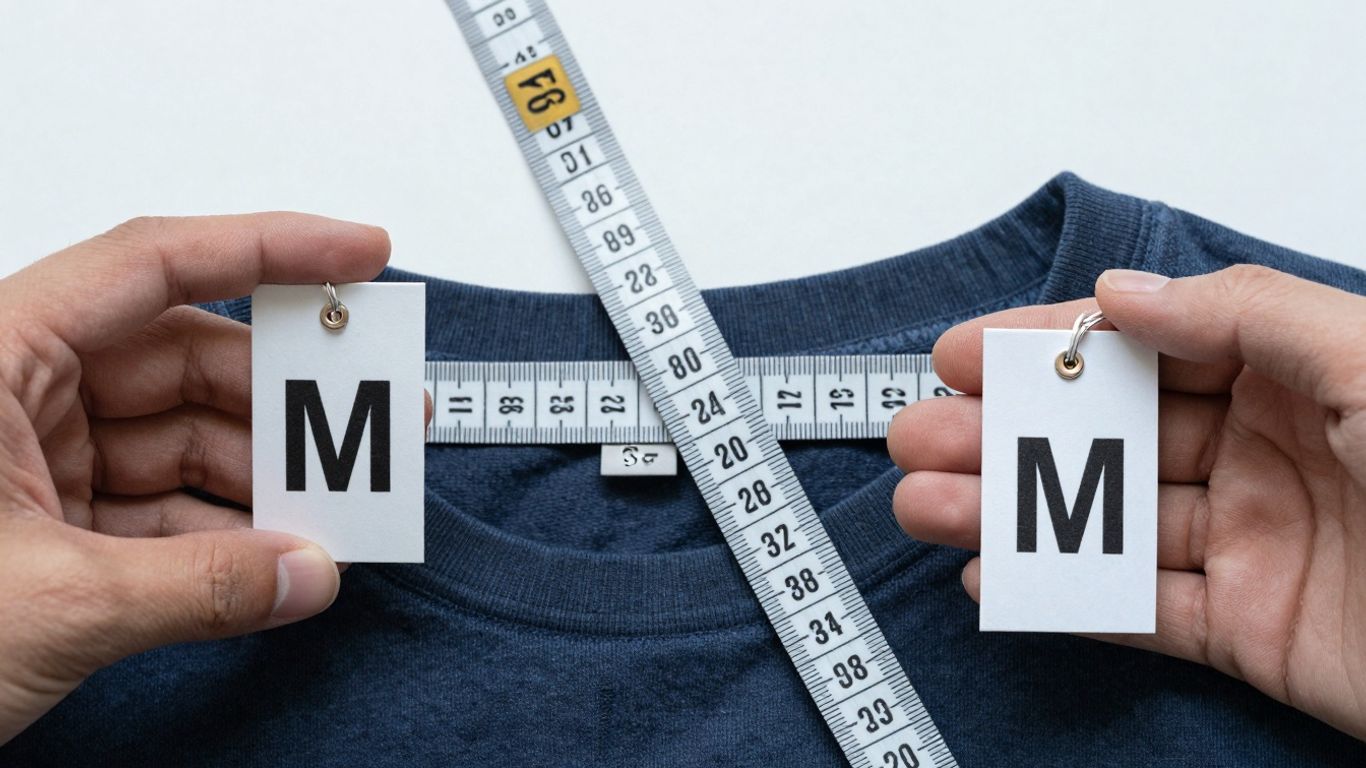
So, you’ve found a piece of clothing that looks amazing online, but the sizing is listed in Asian measurements. What now? Before you just guess, let’s talk about getting it right. Taking accurate measurements is the most reliable way to bridge the gap between Asian and US sizes. It might seem like a hassle, but trust me, it saves a lot of headaches later on.
Measuring for Clothing Fit
When you’re trying to figure out how an Asian size M might fit you compared to a US size, you need to know your own body. Don’t just rely on what you think your size is. Grab a soft tape measure – the kind you’d use for sewing – and let’s get down to business. It’s all about comparing your actual body dimensions to the garment’s measurements.
Key Body Measurements for Accuracy
There are a few key areas you’ll want to measure. For tops, focus on your chest and waist. For bottoms, it’s your waist, hips, and inseam. Here’s a quick rundown:
- Chest/Bust: Wrap the tape measure around the fullest part of your chest, usually right under your armpits. Keep the tape snug but not tight.
- Waist: Find the natural crease of your waist – typically the narrowest part of your torso. Measure around this point.
- Hips: Stand with your feet together and measure around the fullest part of your hips and rear.
- Inseam: For pants, measure from the crotch all the way down to where you want the hem to fall, usually at the ankle.
It’s also helpful to measure your shoulders and sleeve length if you’re concerned about tops fitting just right.
Customer Measurement Guidance
If you’re selling clothing or trying to help someone else figure out their size, providing clear instructions is super important. You can even create a little guide. Here’s what you might include:
- Use a Soft Tape Measure: Avoid using a metal ruler; it’s too stiff.
- Keep Tape Parallel: Make sure the tape measure is parallel to the floor when measuring your body.
- Don’t Pull Too Tight: Measure over your clothes (if you’re measuring for general fit) or directly on skin (for precise garment measurements), but don’t cinch yourself in. You want the measurement of your body, not how small you can make yourself.
- Record Measurements: Write down the numbers immediately. It’s easy to forget!
When comparing Asian sizes to US sizes, remember that Asian clothing often runs smaller. This means an Asian Medium might actually be closer to a US Small or even Extra Small, depending on the brand and specific garment. Always check the detailed product measurements provided by the seller or manufacturer. You can find helpful conversion charts online, like this Chinese to US size conversion resource, but your own measurements are the best starting point.
It’s also a good idea to measure a piece of clothing you already own that fits you well. Lay it flat and measure across the chest, waist, and length, then compare those numbers to the product’s listed measurements. This gives you a real-world comparison that’s often more accurate than just body measurements alone.
Practical Strategies for Size Conversion
So, you’ve got a great product, but the sizing is a bit of a puzzle. Don’t sweat it. There are some solid ways to figure out how Asian Size M stacks up against what your US customers expect. It’s all about being smart and a little bit hands-on.
Collaborating Directly With Suppliers
Your supplier is often your best first stop. Many who work with international buyers already know this is a common issue. When you’re talking to them, don’t be shy about asking for details. They might have conversion charts ready to go, or they can give you the exact measurements for each size they make. It’s also good to know which specific Asian sizing standard they’re using – Chinese, Korean, Japanese, or something else? A good supplier will be happy to share this info, making your job much easier.
Manual Product Measurement for Precision
Sometimes, you just need to see it for yourself. Ordering a sample of the item is a smart move. You get to check the quality, sure, but more importantly, you can grab a tape measure and get the real deal on the dimensions. Measure the chest, waist, sleeve length, and whatever else seems important for that specific garment. Then, you can compare these actual measurements to standard US size charts. This takes a bit more effort, but having your own precise data for your specific products can seriously cut down on returns. It’s like creating your own mini international clothing size conversion guide for your store.
Leveraging Online Conversion Tools
If you’re dealing with a lot of products, manual measurement for every single one might not be practical. That’s where online tools and apps come in handy. Many e-commerce platforms have apps designed specifically to help you create and display size charts. These can automate a lot of the conversion process. Some apps let you upload your own measurements, while others have built-in databases. They can be a real time-saver, especially when you’re just starting out or have a large inventory.
Here’s a quick look at what you might find:
- Automated Chart Builders: Apps that help you create visually appealing size charts quickly.
- Measurement Databases: Some tools have pre-loaded data for various regions.
- Customization Options: Look for tools that let you input your specific product measurements for the most accuracy.
When you’re trying to convert sizes, remember that it’s not just about numbers. It’s about making your customer feel confident. If they can easily find information that helps them pick the right size, they’re much more likely to buy and happy with their purchase. This confidence translates directly into fewer headaches for you and happier shoppers.
Don’t forget to provide clear measurement guidelines to your customers. Showing them how to measure themselves (like chest, waist, and hips) can prevent a lot of guesswork and potential returns. A little bit of guidance goes a long way in making sure that Asian Size M actually fits your US customer well.
Ensuring a Smooth Shopping Experience
Clear Sizing Information on Product Pages
When you’re shopping online, especially for clothes from different countries, the most annoying thing is getting something that just doesn’t fit. It’s a total bummer. To make things easier for everyone, sellers really need to put all the sizing details right there on the product page. This means not just saying "Medium" but giving actual measurements. Think about listing the chest, waist, and length in both inches and centimeters. It’s also super helpful if they mention if the item runs small or large compared to US sizes. A simple note like, "This item runs about one size smaller than US standard," can save a lot of headaches. The clearer the information, the fewer returns you’ll have to deal with.
Accessible and Easy-to-Read Size Charts
Okay, so you’ve found something you like, but the size chart looks like a secret code. That’s no good. Size charts should be super easy to find – maybe a clear link right under the size selection or even a pop-up when you click on "Size Chart." They should also be simple to read. Black and white charts are usually best, but if you want to get fancy with colors, make sure there’s enough contrast so everyone can see it clearly. It’s also a good idea to include a "How to Measure" guide. This could be a simple diagram or even a short video showing people how to take their own measurements accurately. This way, customers aren’t guessing.
Understanding Return Policies
Even with the best information, sometimes things just don’t work out. That’s where a good return policy comes in. If a seller has a clear and fair return policy, it makes buying online a lot less risky. Knowing you can send something back if it doesn’t fit, without a huge hassle or a ton of fees, makes a big difference. It’s good to look for sellers who offer easy returns, especially when you’re trying out a new brand or buying something with Asian sizing. This peace of mind is pretty important when you’re clicking that "buy" button.
Making the shopping process easy and transparent is key. When customers feel confident about sizing and returns, they’re more likely to buy and come back again. It’s all about building trust through clear communication and helpful resources.
Wrapping It Up
So, buying clothes from Asia and expecting them to fit like they do back home can be a bit of a puzzle. Remember, there isn’t one single "Asian size" standard, and things can change a lot from one country to another, or even between brands. The best bet is always to check the specific size chart provided by the seller or brand. If you can, grab a measuring tape and compare your own measurements to theirs. It might take a little extra effort, but it’ll save you the headache of returns and make sure you end up with clothes you actually love to wear.
Frequently Asked Questions
Why are Asian clothing sizes different from US sizes?
Asian clothing sizes are often smaller than US sizes because people in different parts of the world have different average body shapes. Factors like genetics, what people eat, and how they live can all play a role. Because of this, a size ‘M’ in Asia might be more like a US ‘S’ or even ‘XS’.
Is there a standard way to convert Asian sizes to US sizes?
Sadly, there isn’t one single, official way to convert Asian sizes to US sizes. Each brand or maker might use their own chart. It’s like how different schools might have slightly different rules. Always check the specific brand’s size chart when you can.
What’s the best way to figure out my size when buying Asian clothes?
The most reliable method is to measure yourself! Grab a measuring tape and check your chest, waist, and hips. Then, compare those numbers to the size chart provided by the seller or brand. Taking measurements yourself beats guessing any day.
If I’m a US Medium, what Asian size should I look for?
This can be tricky! Generally, if you wear a US Medium, you might need to look at an Asian Large (L) or even Extra Large (XL). It really depends on the brand and the type of clothing. It’s always safer to size up or check the specific measurements on the size chart.
Can I trust online size conversion tools?
Online tools can be helpful starting points, but they aren’t always perfect. Think of them as a general guide. Since sizes can vary so much between brands, using these tools along with the seller’s specific size chart and your own measurements is the smartest approach.
What should I do if the clothes don’t fit after I buy them?
Before you buy, always check the seller’s return policy! Knowing if you can send the item back for a refund or exchange if it doesn’t fit is super important. A good return policy can save you a lot of hassle and disappointment.