So, you’re eyeing some cool clothes online from an Asian brand, but then you see the size chart and get totally confused. What’s a US large in Asian size, anyway? It’s a question many of us have. Asian sizing can be a bit of a mystery because it’s usually smaller than what we’re used to here in the States. This guide is here to help clear things up so you can stop guessing and start buying clothes that actually fit.
Key Takeaways
- Asian clothing sizes typically run smaller than US sizes, often by one to two sizes.
- A US Large in women’s clothing might correspond to an Asian size XL or even XXL, depending on the specific brand and country.
- For men, a US Large often translates to an Asian Medium or Large, but checking chest and waist measurements is key.
- Always look for specific measurements (like bust, waist, hips, chest, and length) on the product page, not just the size label.
- Customer reviews can provide helpful real-world feedback on how Asian sizes fit compared to US sizes.
Understanding Asian Size To US Size Differences
Shopping for clothes online can be a bit of a gamble, especially when you’re crossing continents. If you’ve ever ordered something from an Asian brand expecting your usual size, only to have it arrive way too small, you’re definitely not alone. It’s a common frustration, and it all comes down to how sizing works differently across the globe.
Why Asian Sizes Differ From US Standards
The main reason Asian sizes often run smaller than US sizes is simply that they’re designed for different average body types. Think about it – people in different parts of the world tend to have different average heights and builds. Clothing manufacturers create their size ranges based on the typical customer in their region. So, what’s considered a ‘medium’ in one country might be a ‘small’ or even ‘extra small’ in another. It’s not about one being
Decoding Women’s Apparel Sizing
General Women’s Asian To US Size Conversion
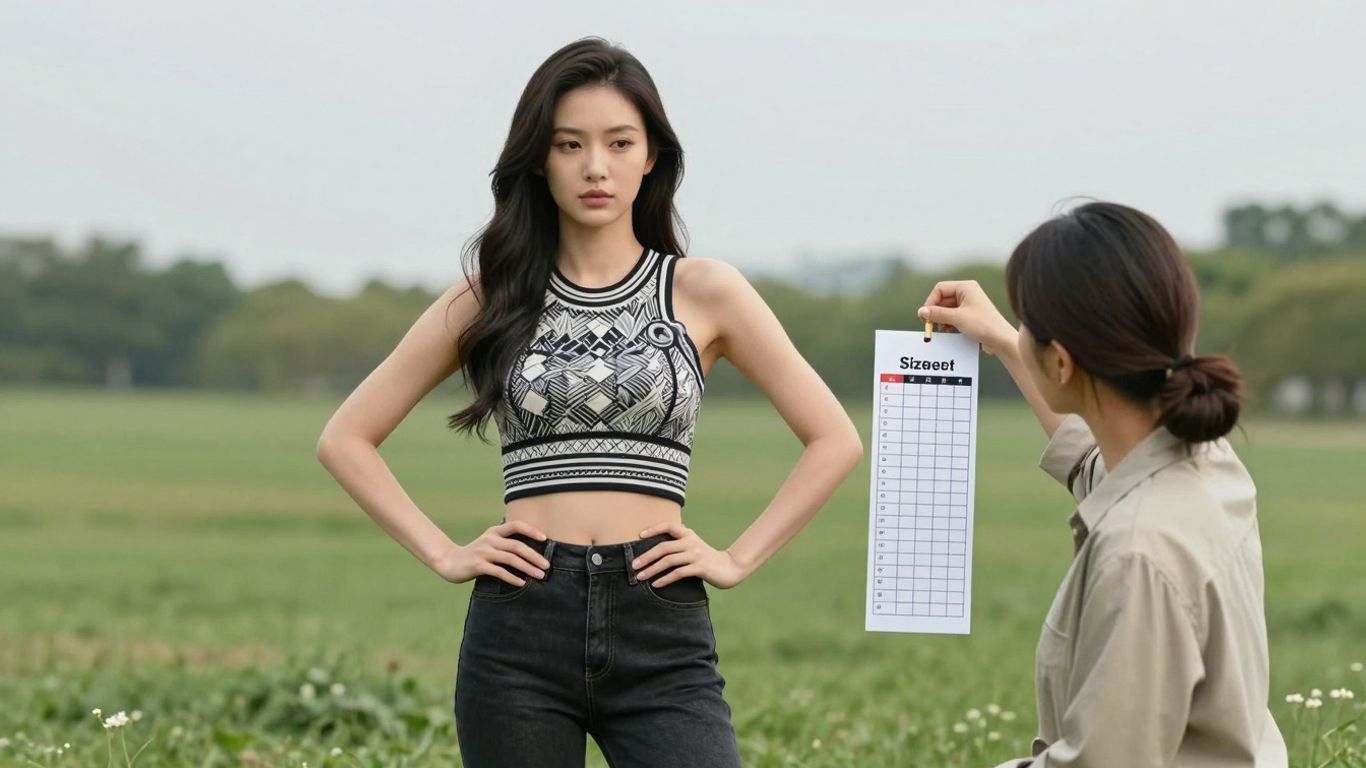
Figuring out women’s clothing sizes between Asian and US standards can feel like a puzzle sometimes. While letter sizes like S, M, L, and XL are common everywhere, the actual measurements they represent can differ quite a bit. Asian sizing often runs smaller than US sizing, so what might be a US Large could easily be an Asian XL or even XXL. It’s not just about the letters; it’s about the numbers behind them.
Specific Measurements For A Perfect Fit
To really nail down your size, forget just looking at the S, M, L labels. You’ve got to get friendly with a tape measure. Focus on your bust, waist, and hip measurements. For tops, knowing your bust measurement is key. For dresses and pants, your waist and hip measurements are just as important. Remember, Asian clothing is often designed with different body proportions in mind, so a size that fits your bust might be too tight in the waist or hips, or vice versa.
Here’s a general idea of how Asian sizes might compare to US sizes, but always check the specific brand’s chart:
| Asian Size | US Size |
|---|---|
| XS | 0-2 |
| S | 4-6 |
| M | 6-8 |
| L | 8-10 |
| XL | 10-12 |
| XXL | 12-14 |
What Is A US Large In Asian Size For Women?
So, what’s a US Large in Asian sizing? Generally speaking, a US Large often translates to an Asian XL or sometimes even an XXL. This is because Asian sizes tend to be about one to two sizes smaller than their US counterparts. For example, if you typically wear a US Large, you might need to look for an Asian XL or XXL. Always, always check the specific size chart provided by the brand or seller. They usually list measurements in both centimeters and inches, which is your best bet for finding a good fit. Don’t be afraid to measure yourself and compare those numbers directly to the chart. It’s the most reliable way to avoid the frustration of a size that just doesn’t work out.
It’s not uncommon for a brand’s sizing to vary even within the same country. When shopping for Asian clothing, treat each brand’s size chart as its own unique guide. Relying solely on general conversion charts can lead to disappointment, so taking the time to check specific garment measurements is a smart move.
Here are some common measurements to look for:
- Bust: Measure around the fullest part of your chest.
- Waist: Measure around your natural waistline, the narrowest part of your torso.
- Hips: Measure around the fullest part of your hips.
- Length: For tops and dresses, check the garment’s length from shoulder to hem. For pants, check the inseam and outseam.
Navigating Men’s Clothing Sizes
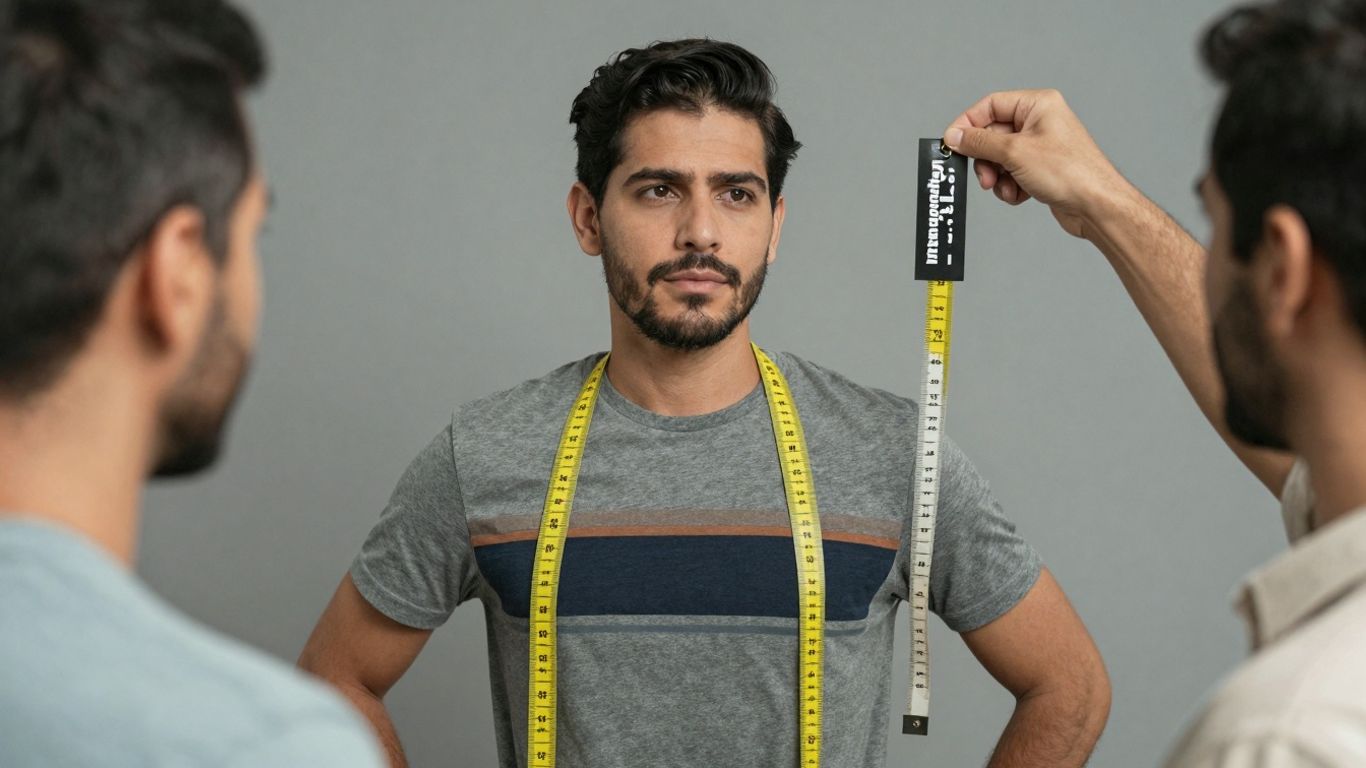
Alright, let’s talk about men’s clothing sizes when you’re looking at stuff from Asia. It can feel like a bit of a puzzle sometimes, right? Asian sizes for men often run smaller than what we’re used to in the US. This means a size that might be a Large for you here could be a Medium or even a Small over there. It’s not just about the letter; it’s about the actual measurements. Things like shoulder width and chest circumference can be quite different.
Men’s Asian To US Size Equivalents
So, how do you figure out what’s what? The best way is to ditch the standard S, M, L labels for a moment and focus on the numbers. Most Asian brands will provide a size chart, and that’s your golden ticket. You’ll usually see measurements in centimeters or inches. It’s super helpful to have a tape measure handy.
Here’s a general idea of how Asian sizes often stack up against US sizes for men’s tops:
| Asian Size | US Size (Approximate) | Chest (inches) | Waist (inches) |
|---|---|---|---|
| S | XS | 34-36 | 28-30 |
| M | S | 37-40 | 31-33 |
| L | M | 41-44 | 34-36 |
| XL | L | 45-48 | 37-39 |
Remember, this is a rough guide. Always, always check the specific product’s size chart.
Key Measurements For Men’s Apparel
To really nail the fit, you need to know your own measurements. Don’t just guess! Grab a soft tape measure and take these down:
- Chest: Measure around the fullest part of your chest, right under your arms. Keep the tape snug but not tight.
- Waist: Find the natural crease of your waist (usually around your belly button) and measure around it.
- Shoulders: Measure from the edge of one shoulder bone to the edge of the other, straight across your back.
- Sleeve Length: With your arm relaxed at your side, measure from the center of your neck, over your shoulder, down to your wrist bone.
- Inseam: Measure from the very top of your inner thigh down to your ankle bone. This is key for pants!
Knowing these numbers is like having a secret decoder ring for clothing sizes. It takes the guesswork out of online shopping, especially when you’re dealing with different sizing systems.
What Is A US Large In Asian Size For Men?
Okay, so you wear a US Large. What does that usually translate to in Asian sizing? Based on the general charts, a US Large often lines up with an Asian XL or sometimes even an XXL. For example, a US Large chest measurement might be around 41-44 inches, which often corresponds to an Asian XL size that lists a chest measurement in that range. But again, this is where checking the specific product’s chart is non-negotiable. Some brands might have their own unique sizing, and you don’t want to end up with something too tight or too loose. It’s always better to err on the side of caution and maybe even size up if you’re unsure, especially for items like jackets or shirts where a looser fit is often preferred.
Children’s Sizing Considerations
Asian Kids’ Sizing Based On Height
When you’re shopping for kids’ clothes from Asian brands, you’ll notice things can be a bit different than what you’re used to. A big thing is that many Asian kids’ sizes are based on a child’s height in centimeters, rather than just age. This makes sense, right? Kids grow at different rates, and height is a more consistent measure. So, if you see a size like ‘100cm’, it’s a good hint that it’s meant for a child around that height. It’s a bit more precise than just picking a size based on whether they’re 4 or 5 years old.
Converting Children’s Sizes Accurately
Okay, so how do you actually figure out what size to get? It’s not just about looking at the number on the tag. You really need to measure your child. Get a tape measure and check their height, chest, and waist. Then, compare those numbers to the size charts provided by the brand you’re looking at. Don’t just assume a ‘US Large’ for kids is going to be the same as an ‘Asian Large’. It’s almost never that simple.
Here’s a general idea of how some Asian sizes might line up with US sizes, but remember, this is just a starting point:
| Asian Size (cm) | US Size (Approx.) | Age (Approx.) | Height (inches) |
|---|---|---|---|
| 80 | 12-18M | 1-1.5 years | 31-32 |
| 90 | 18-24M | 1.5-2 years | 35-36 |
| 100 | 2-3Y | 2-3 years | 39-40 |
| 110 | 4-5Y | 4-5 years | 43-44 |
| 120 | 6-7Y | 6-7 years | 47-48 |
Remember, the ‘T’ in US sizes often means ‘Toddler’, so keep that in mind too.
Understanding Toddler and Youth Sizes
Toddler and youth sizes can be a bit of a maze. In the US, toddler sizes often use ‘T’ (like 2T, 3T), and they’re generally for kids aged 2-5. Youth sizes usually start around 6 or 7 and go up. Asian sizing might not use these exact terms. They might stick to height measurements or age ranges that don’t perfectly match up. For example, a size that fits a 4-year-old in the US might be labeled differently in an Asian size chart. It’s always best to check the specific measurements for chest, waist, and length, and compare them to your child’s actual measurements. Don’t forget to check if the brand separates sizes for boys and girls as they get a bit older, as proportions can start to differ.
When buying for kids, especially online, it’s a good idea to measure them carefully. Kids grow fast, and sizes can vary a lot between different brands, even within the same country. Always look for the specific measurements provided by the seller, not just the general size labels. It’s better to have clothes that fit well now than to guess and have them be too big or too small.
Plus Size Apparel Conversions
Asian Plus Size Ranges Compared To US
Okay, so finding plus sizes when shopping from Asian brands can be a bit of a puzzle. Generally speaking, Asian plus sizes tend to run smaller than what we’re used to in the US. It’s not uncommon for an Asian XXL to fit more like a US Large or even Medium, depending on the brand and the specific garment. This is partly because the general sizing standards in many Asian countries are based on slimmer body types. So, if you’re usually a US plus size, you’ll likely need to size up significantly when ordering from Asian retailers.
Challenges With Asian Plus Size Fit
The biggest hurdle is that the measurements just don’t always line up. Asian brands often focus on a more tailored or slim fit, even in their larger sizes. This means that while the overall size label might seem comparable (like a 2XL), the actual bust, waist, and hip measurements can be quite different from a US 2XL. You might find that a garment fits your bust okay but is too tight in the waist, or vice versa. It’s really about the proportions being different.
Finding Your Plus Size Asian Fit
So, how do you actually find something that fits? The absolute best way is to ditch the standard size labels and focus entirely on the specific measurements provided by the seller. Look for charts that list bust, waist, hip, and sometimes even shoulder width and sleeve length in inches or centimeters.
Here’s a general idea of how some Asian plus sizes might compare to US sizes, but remember, this is just a rough guide:
| Asian Plus Size | US Plus Size (Approx.) | Bust (inches) | Waist (inches) | Hips (inches) |
|---|---|---|---|---|
| 2XL | 14-16 | 41-43 | 34-36 | 43-45 |
| 3XL | 18-20 | 44-46 | 37-39 | 46-48 |
| 4XL | 20-22 | 47-49 | 40-42 | 49-51 |
Always, always, always check the specific product’s measurement chart. Don’t just assume. It’s also a good idea to measure your own body and compare those numbers directly to the garment’s measurements. If you’re between sizes, it’s usually safer to go with the larger one, especially if the fabric doesn’t have much stretch.
Avoiding Common Sizing Mistakes
It’s easy to get tripped up when trying to figure out Asian clothing sizes. You might think you’ve got it all figured out, but then the package arrives, and nothing fits right. It happens to the best of us! Let’s talk about some common slip-ups so you can shop smarter.
Misinterpreting Asian Size Labels
This is probably the biggest one. You see an "L" on an Asian garment and think, "Great, that’s my size!" But here’s the thing: an Asian Large is almost never the same as a US Large. Asian labels often use different systems, sometimes based on body measurements in centimeters rather than a general letter size. Always compare the actual measurements listed on the seller’s size chart to your own body measurements. Don’t just rely on the letter. It’s like trying to use a European plug adapter in the US – they look similar, but they won’t work the same way.
Ignoring Regional Sizing Variations
Asia is a massive continent, and just like in the US, different regions and countries have their own sizing standards. A size that’s common in China might be different in Japan or Korea. So, if you’re buying from a specific country, try to find sizing information tailored to that region or brand. Don’t assume a "one-size-fits-all" from one place will fit the same as a "one-size-fits-all" from another. These often run much smaller than what we’re used to.
The Importance Of Specific Measurements
This is where people often cut corners. You might measure yourself once, quickly, or just guess. But when you’re dealing with international sizing, especially Asian sizes that tend to run smaller, precision is key.
Here’s a quick rundown on getting your measurements right:
- Bust: Measure around the fullest part of your chest, keeping the tape level.
- Waist: Measure around your natural waistline, usually the narrowest part of your torso.
- Hips: Measure around the fullest part of your hips and rear.
- Inseam (for pants): Measure from your crotch down to where you want the pants to end.
Always double-check your measurements, and then compare them directly to the specific garment’s measurements provided by the seller. Don’t just look at the letter size. It’s better to measure twice and order once, as they say.
Other Pitfalls to Watch Out For
- Fabric Type: Some fabrics, like 100% cotton, can shrink after washing. If you’re buying an item made from such material, consider sizing up to account for potential shrinkage.
- Customer Reviews: Don’t skip reading customer reviews! People often share whether an item runs small, large, or true to size, which can be incredibly helpful when the size chart is confusing.
- Tailoring: Sometimes, even with the best measurements, a garment might need minor adjustments. Budgeting a little for alterations can make a less expensive piece fit like a dream.
So, What’s the Takeaway?
Alright, so we’ve gone through all the ins and outs of Asian sizing. It’s pretty clear that a US Large isn’t just a simple swap for an Asian Large. Things run smaller, and honestly, there isn’t one single rule that fits every country or brand. The best advice? Always, always check the specific size charts provided by the seller. Measure yourself, compare those numbers, and don’t be afraid to size up if you’re unsure. It might take a little extra effort, but getting that perfect fit without the hassle of returns is totally worth it.
Frequently Asked Questions
Why do Asian clothing sizes seem smaller than US sizes?
Asian clothing sizes are often smaller because they’re made for the average body types found in Asian countries, which tend to be slimmer than in the US. Think of it like different brands in the US having slightly different fits – it’s similar, but across countries!
What’s the best way to figure out my Asian size?
The best way is to grab a measuring tape! Measure your bust, waist, and hips. Then, compare those numbers to the size chart provided by the Asian brand you’re looking at. Don’t just guess or assume your usual US size will work.
If I usually wear a US Large, what size should I get in Asian clothing?
Generally, a US Large often translates to an Asian XL or even XXL. However, this can change a lot between brands and countries. It’s always safest to check the specific size chart and maybe even add one or two sizes up from your usual US size.
Are Asian sizes the same in every Asian country?
No, not at all! Just like US sizes can vary a bit between brands, Asian sizes differ from country to country (like China, Japan, or Korea) and even between different clothing companies. Always look for the specific size chart for the brand and country you’re buying from.
What are the main differences in men’s Asian sizing compared to US sizing?
Similar to women’s clothing, men’s Asian sizes usually run smaller, especially in the chest and shoulders. An Asian Large for men might be closer to a US Medium or even a Small. Checking measurements for chest and waist is super important.
How do I avoid making mistakes when buying Asian clothes online?
The biggest tip is to never rely on just the size label (like L or XL). Always measure yourself and compare those numbers to the brand’s specific size chart. Reading customer reviews can also give you clues about whether an item runs small or large.